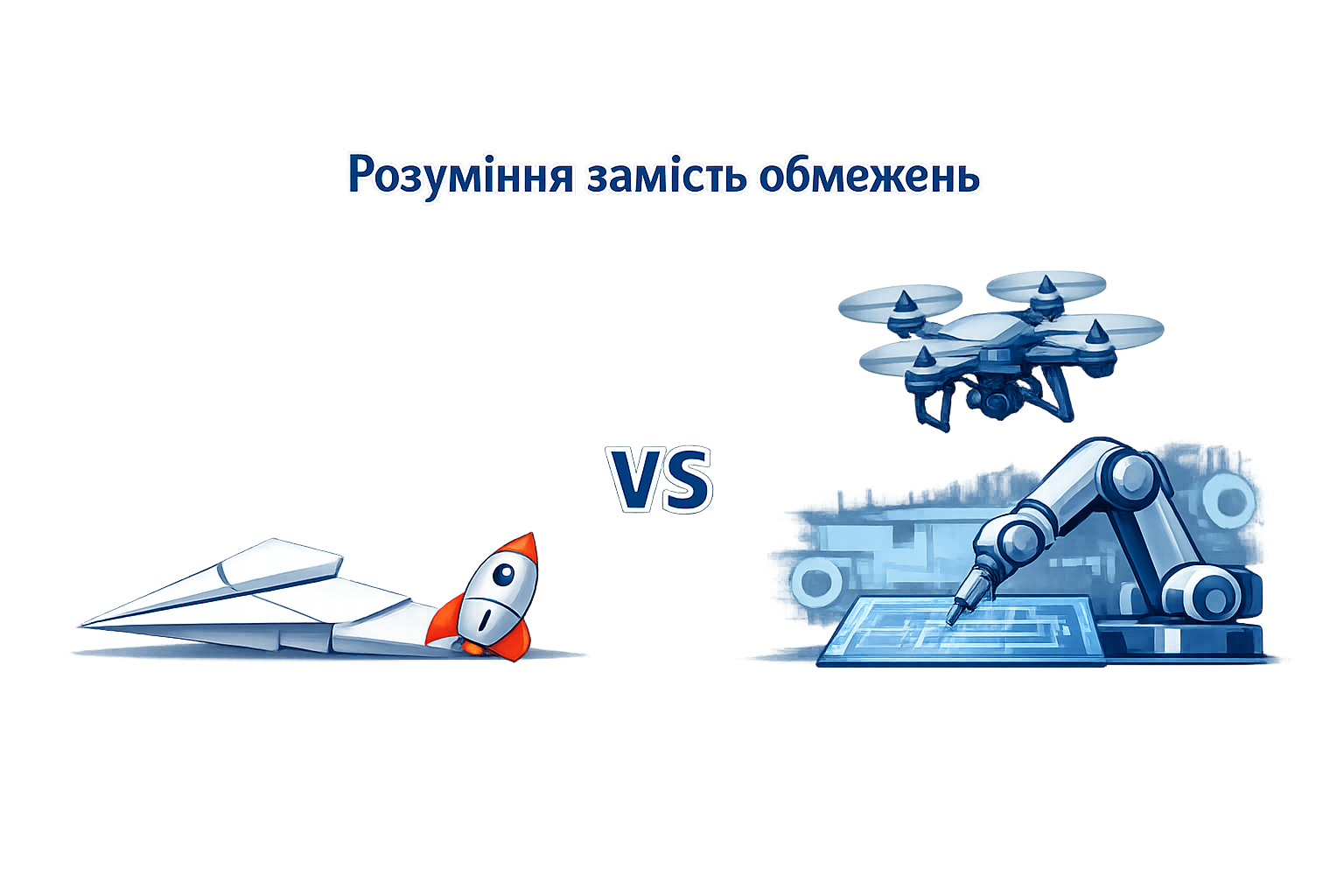
Imagine a hospital. A doctor measures every patient's temperature and reports the average: 36.6°C. "Everyone is fine," he says. But one patient has 42°C. Another 34°C. The average says "normal". Reality says "critical".
Most control systems work the same way. One coefficient for all sensors. One model for all frames. Average temperature across the ward. Simple. Fast. But not accurate.
We build differently. We don't look for the average. We build a heat map of every organ. Harder. But right. And there is a way to do it fast.
Principle 1: Not average temperature, but a heat map
When you average, you lose detail. Three gyroscopes. Three accelerometers. Each has its character: one noisier, another drifts with heat, a third has nonlinearity at range edges.
Typical systems say: "One coefficient for all. Close enough to truth." We say: "Individual matrix for each. Matches truth exactly."
It's like the difference between low-resolution and high-definition. Both show the same scene. But detail is what matters when the margin is centimetres or milliseconds.
Simplification saves compute time. But we found a way to compute accurately and fast. So we don't sacrifice detail.
"If you want to find the secrets of the universe, think in terms of energy, frequency and vibration" — Nikola Tesla
Every sensor vibrates in its own way. We don't average vibrations. We listen to each one.
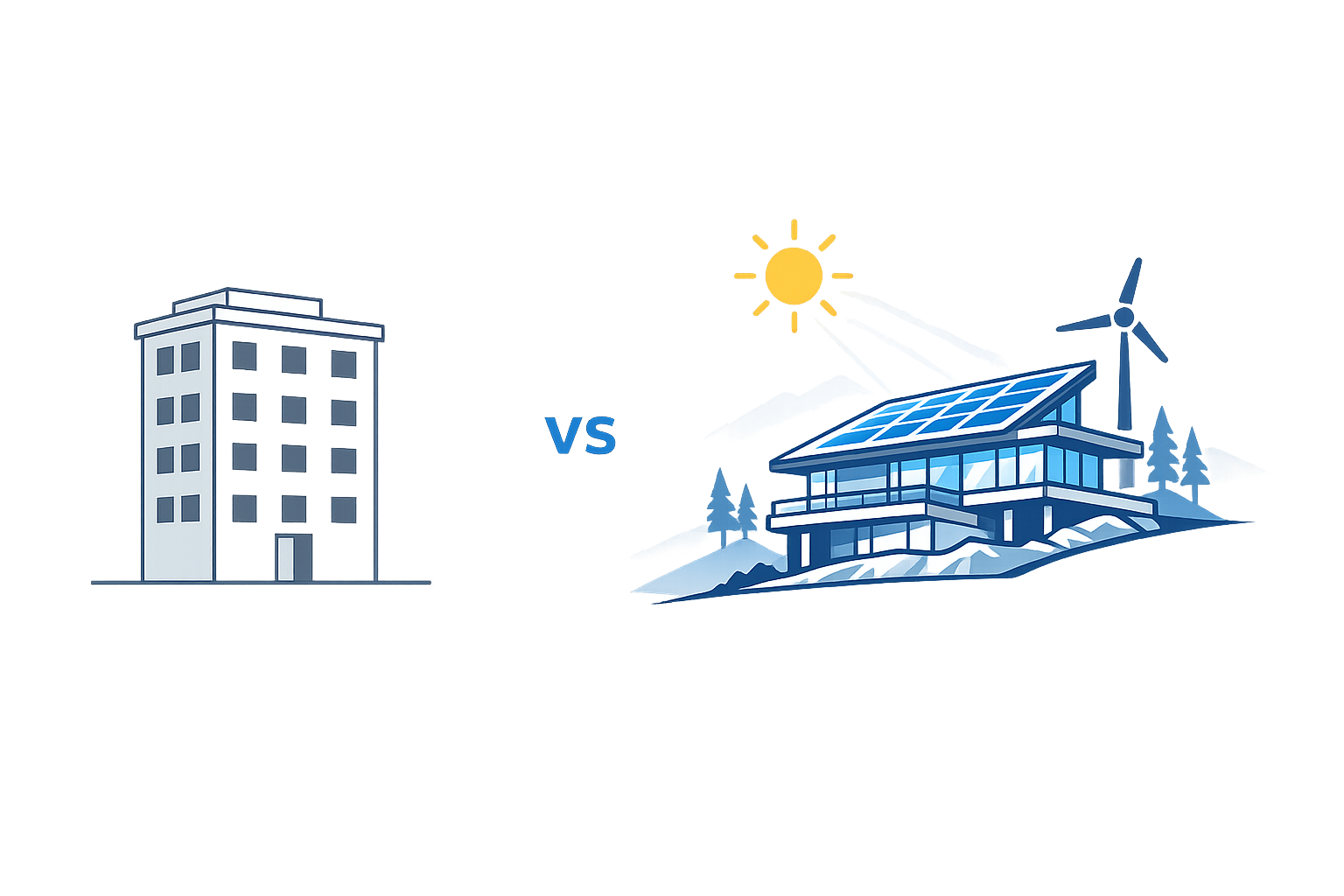
Principle 2: Not a generic building, but a masterpiece on a specific site
Imagine two architects. One builds standard houses: same everywhere, regardless of soil, wind, sun. Fast. Cheap. Good enough. The other builds masterpieces: accounts for terrain, wind direction, sun angle, soil. Slow. Costly. Unique.
A universal controller is a standard house. It fits "on average". PID is tuned empirically. The system compensates for the gap between abstraction and reality.
We build the masterpiece. Frame geometry is the terrain. Mass distribution is soil properties. Moment of inertia is wind direction. We don't "tune" the system to the frame. We build a model that matches this frame's physics.
Full dynamics. No simplifications. With optimized computation.
"Nature uses the longest thread to weave the shortest path" — Richard Feynman
The longest thread is the full physics model. The shortest path is optimized code that computes it fast.
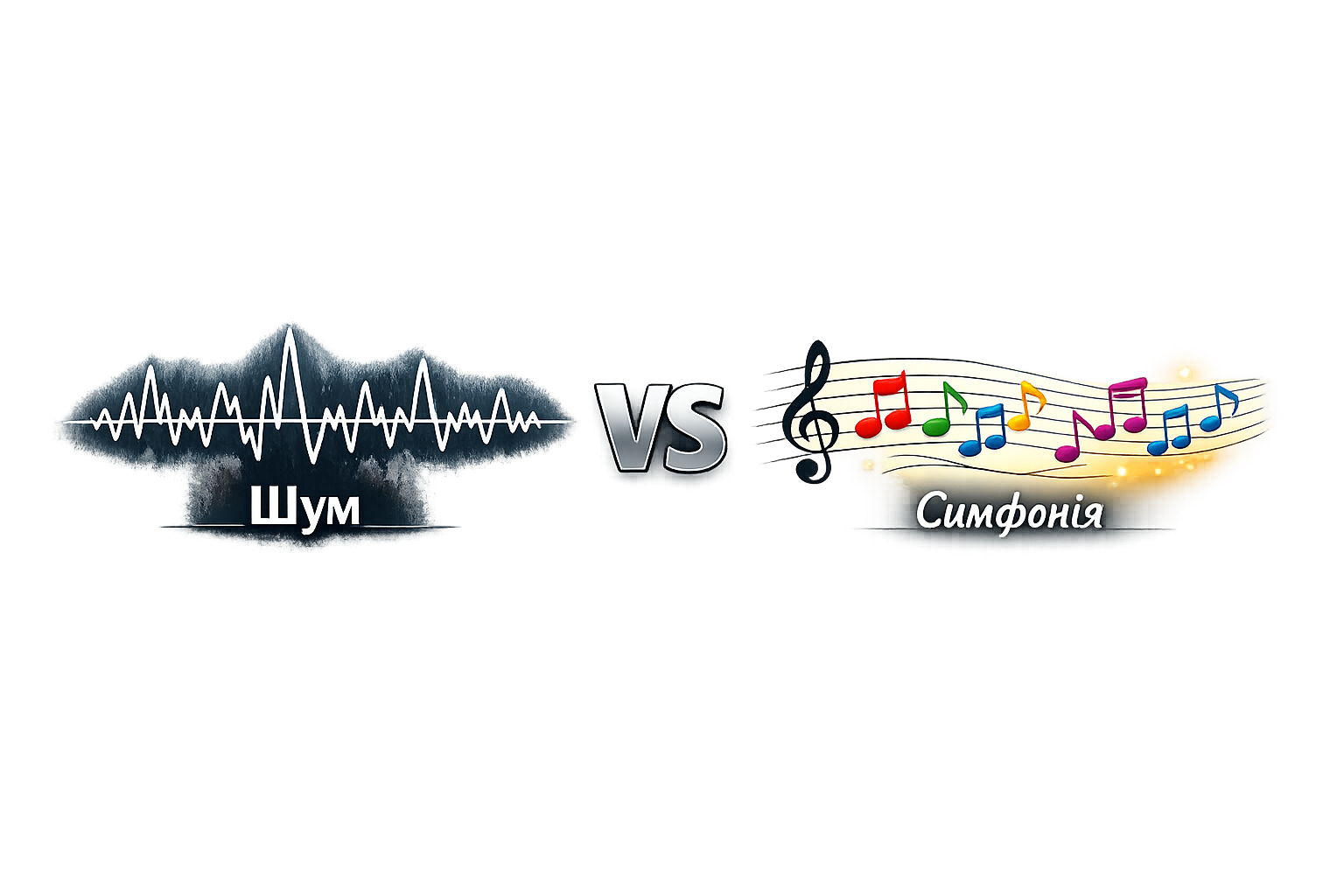
Principle 3: Not noise, but symphony
An orchestra plays. Some hear only "sound". Some hear each instrument: violin, flute, cello. The difference between noise and music is the ability to tell details apart.
Wind, magnetic field, temperature. Most systems hear "noise". They filter. They discard information for simpler processing.
We hear the symphony. Magnetic field — orientation. Wind direction — load. Wind strength — airspeed. Temperature — medium viscosity and thermal gradients.
These are not disturbances. They are information. Computing them is hard. But we found methods that let us process all these channels fast. So we don't filter the symphony down to a hum. We listen to every instrument.
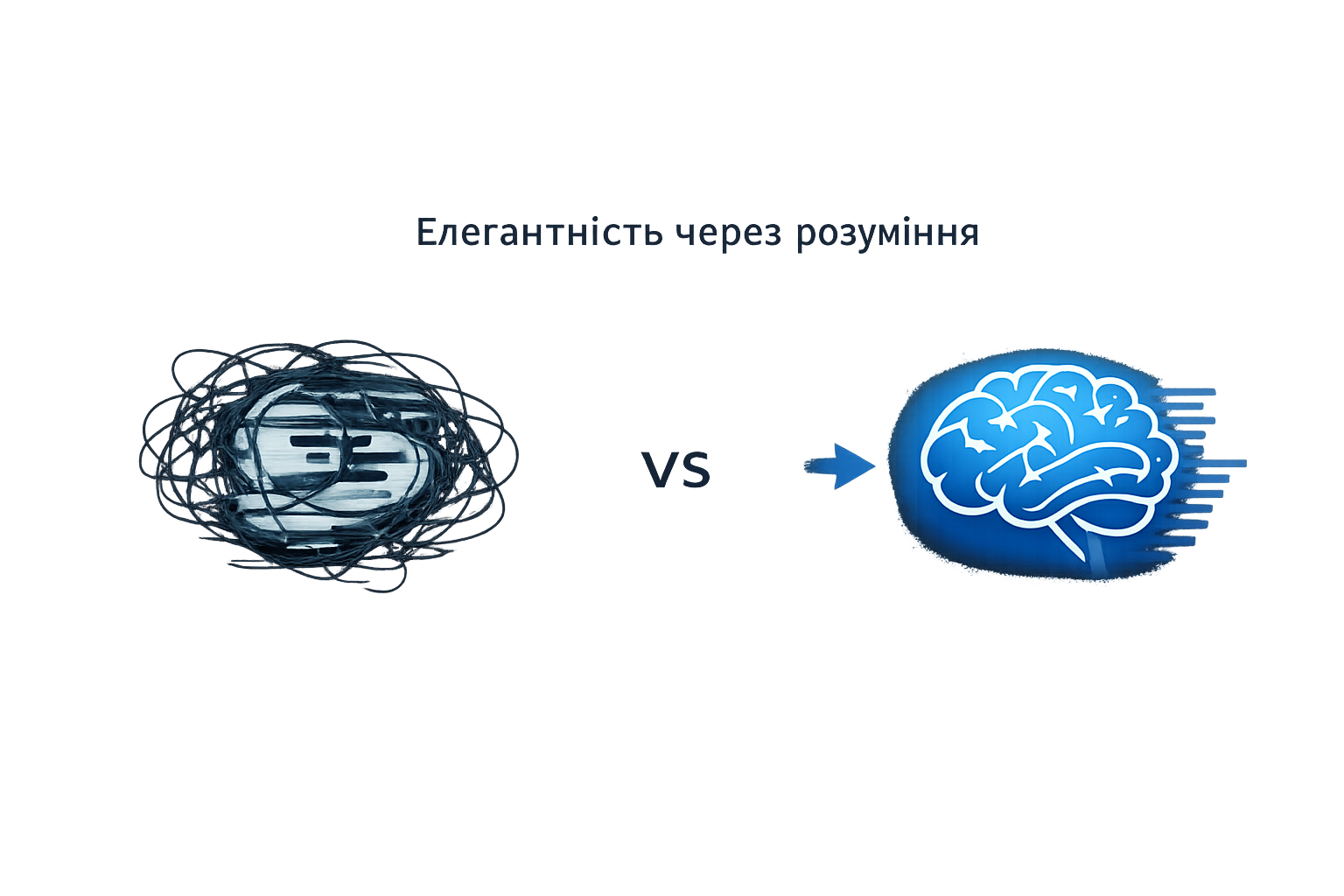
Principle 4: Elegance through understanding
When you don't understand the problem, the code looks complex. When you do — the code becomes simple.
Most systems simplify the model so the code runs fast. Result: simple code that computes an incomplete picture.
We do the opposite. First we understand the full picture. Then we find the math that makes computation efficient. Then we write code that uses the processor architecture optimally.
A week on 30 lines. Not because they're hard to write. Because we need to understand what to compute and how to do it fast.
"Simplicity is the ultimate sophistication" — Leonardo da Vinci
When you understand the physics, the code becomes elegant. Not by throwing away complexity. By finding an elegant way to handle it.
We don't discard physics. We don't simplify the math. We find ways to compute the full system fast.
Experiments. Math. Circuit design. Programming. All tools for one goal: maximum speed and maximum accuracy. At once.
Most choose. We refused to choose. We found a third way.
"The best way to predict the future is to invent it" — Alan Kay
We don't adapt old approaches. We invent new ones.